
Services
Our Services
From Planning to Operation
Deliver with Clarity and Confidence

Consultation & Evaluation
• Load analysis and system sizing
• Clear performance and cost structure
• Project assessment on local grid conditions
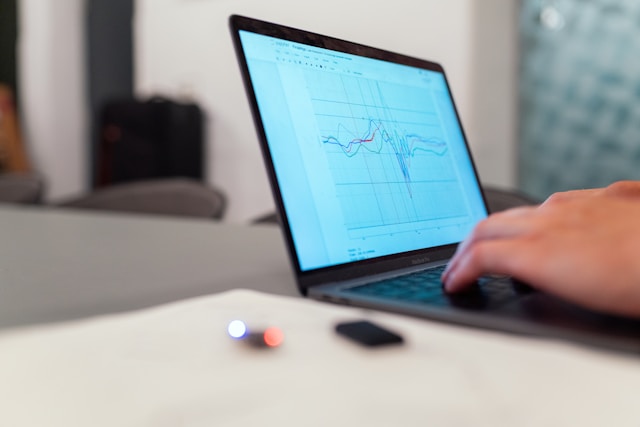
Scheme Design
• Integrated PV, storage, and grid
• System-level design for real conditions
• Optimized for efficiency and reliability
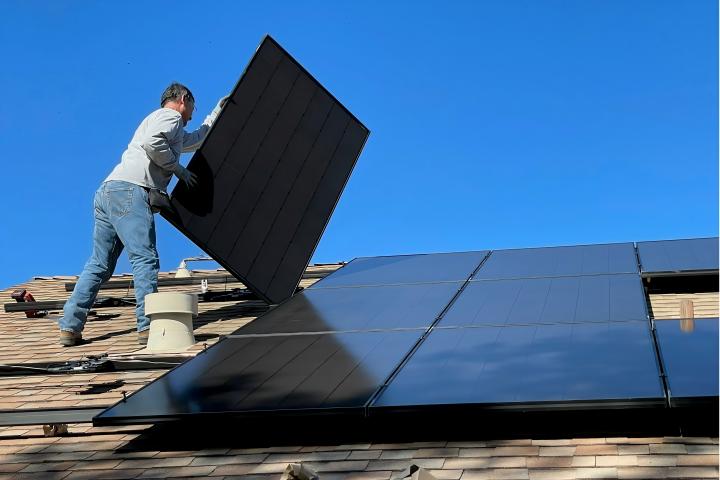
EPC
• Integrated EPC delivery
• Compliance with engineering standards
• Construction, installation, and commissioning
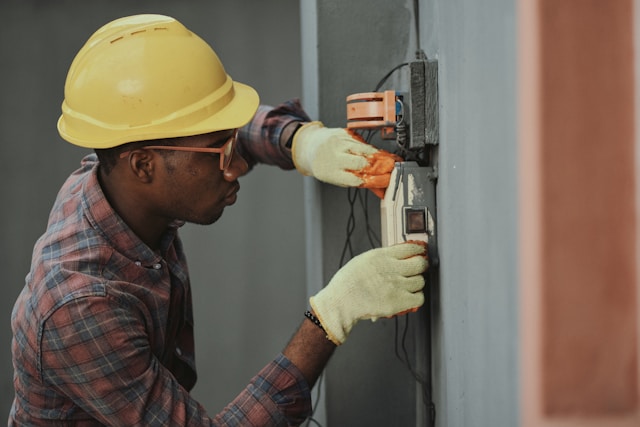
Maintenance & Upgrade
• Continuous system monitoring
• Scalable upgrades for future needs
• Preventive maintenance and optimization
Download Electronic Product Catalog
FAQ
Glossary of Terms
C&I ESS: Commercial & Industrial Energy Storage System
EMS: Energy Management System (the “brain” of the storage system)
PCS: Power Conversion System (executes charging/discharging commands)
BMS: Battery Management System (monitors battery health)
SOC: State of Charge (remaining battery percentage)
VPP: Virtual Power Plant (aggregates distributed storage resources to participate collectively in grid regulation)
Q.What information should I provide if I want a quotation?
A.You can send an email to sa@eleqtraenergy.com require a quotation. And we will have a salesman corresponding to the market contact you asap. And it will be appreciated if you can provide us your company basic information, market, and company type.
Q1: Is my factory/company actually suitable for installing energy storage?
A: Businesses suitable for energy storage typically have the following characteristics:
High Electricity Demand: There is a clear peak in electricity usage, or the business falls under categories like high-energy-consumption manufacturing, data centers, or large commercial complexes.
Significant Electricity Price Differences: The business is located in an area with Time-of-Use (TOU) electricity pricing, and the peak-valley price difference is substantial (Typically, projects are more economical when the price difference exceeds 0.7 RMB/kWh).
Constrained Transformer Capacity: The transformer is operating at full capacity for extended periods, and the business faces the high cost of upgrading transformer capacity.
High Power Quality Requirements: The business needs protection against voltage sags or sudden power outages to ensure critical loads remain operational.
Q2: What are the main revenue streams for energy storage now? I've heard policies have changed; is it still profitable?
A: Following the release of policy documents like No. 136 in 2025, the industry is transitioning from a single “peak-valley arbitrage” model to diversified revenue streams. Current mature revenue models include:
Core Revenue (Peak-Valley Arbitrage): Although price differences fluctuate in some provinces, performing two cycles per day (charging twice and discharging twice) in key provinces like Zhejiang, Guangdong, and Jiangsu still provides stable electricity cost savings.
Demand Management: Reducing peak loads through storage discharge lowers the basic electricity demand charges for businesses.
Demand Response / Virtual Power Plant (VPP): Aggregating storage resources to participate in the ancillary services market via aggregators to earn additional subsidies. This is expected to be a significant growth area in the future.
Dynamic Capacity Expansion: Avoiding the high costs associated with upgrading transformer capacity.
Our Energy Management System (EMS) automatically predicts the optimal operating mode in real-time based on local electricity prices and load forecasts, ensuring project profitability.
Q3: What is the typical payback period for an energy storage system investment?
A: The payback period depends on factors like electricity pricing policies, installed capacity, and financing costs. In major commercial and industrial provinces in China, based on current peak-valley price differences and a two-cycle-per-day strategy, the typical payback period is generally 4 to 6 years. As participation in Virtual Power Plants and other ancillary services increases, returns are expected to further improve, potentially shortening this payback period.
Q4: Is it safe to place the energy storage system on my factory premises? Is there a fire risk?
A: Safety is our primary design principle. We employ a “Prevent + Protect + Suppress” three-tiered safety system:
Inherent Safety: We use automotive-grade Lithium Iron Phosphate (LFP) battery cells, which have passed rigorous tests like nail penetration and overcharging, preventing thermal runaway at the source.
Multi-level Protection: We implement a three-level fire suppression architecture: PACK-level (using agents like Perfluorohexanone), Cluster-level, and Cabinet-level (water sprinkler system), complemented by combustible gas monitoring and explosion-proof ventilation.
Intelligent Early Warning: Our system features 24/7 cloud-based monitoring. Anomalies in temperature and voltage at the individual cell level are detected early, providing advanced warnings to prevent incidents.
Q5: How long is the battery lifespan? What happens when it degrades?
A: Our standard products use high-cycle-life LFP cells. Under standard operating conditions, the design life exceeds 10 years. The battery cycle life typically exceeds 6,000 to 8,000 cycles. Even after 6,000 charge-discharge cycles, the remaining capacity is guaranteed to be no less than 80% of the initial capacity. Furthermore, our Battery Management System (BMS) includes balancing functions to effectively slow down battery degradation.
Q6: Does the equipment take up a lot of space? My facility has limited space.
A: Modern C&I energy storage products are trending towards high-density integration. For example, our main liquid-cooled outdoor cabinet (approx. 100kW/215kWh) occupies only about 1.5 square meters of floor space – significantly less than traditional air-cooled products. They can be installed back-to-back or side-by-side, making full use of available space on your premises. The system is modular and can be flexibly scaled based on your power capacity needs.
Q7: Can the system operate reliably in harsh environments?
A: Our outdoor energy storage cabinets typically have an ingress protection rating of IP54 or IP55 (dust-proof and protected against water jets). They are designed to withstand harsh outdoor conditions such as high temperatures, high humidity, sandstorms, and salt spray. The built-in intelligent thermal management system ensures the battery cells operate within their optimal temperature range, and the system can function normally even in low-temperature environments down to -20°C.
Q8: Will installing the energy storage system require me to halt production? How long does installation take?
A: No prolonged production halt is required. Our system uses a modular “Lego-like” design. Installation primarily involves foundation preparation, cable connection, and grid-connection commissioning. The entire process from site preparation to grid connection typically takes about one month. For grid connection, only a brief power outage of 2-4 hours is needed for final wiring, which we can schedule during off-peak hours (nighttime) or planned maintenance shutdowns to accommodate your production schedule.
Q9: Will connecting the storage system affect my existing transformer or solar PV system?
A: Not only will it not negatively affect them, but it can also optimize their performance.
Regarding the Transformer: Our EMS features anti-backflow and demand control functions. This ensures that charging from the grid does not exceed the transformer’s load limit, and during discharge, power is prioritized for local consumption, preventing energy from flowing back into the external grid.
Regarding Solar PV: The system supports PV-Storage integration. It can track PV generation in real-time, maximizing the utilization of green energy by prioritizing direct consumption of PV power, storing excess solar energy in the battery, and discharging the battery during off-peak solar generation times.
Q10: What government or grid company approvals are needed for installation?
A: You don’t need to worry about complex procedures. We provide a one-stop “turnkey” service. Typically, we handle:
Government Filing: Submitting the project for registration with the local Development and Reform Commission or Economy and Information Technology Bureau via the online investment project supervision platform.
Grid Connection Approval: Submitting the connection plan to the local power company and obtaining their approval for grid connection.
Other Approvals: Depending on local requirements, this may involve fire safety design reviews or environmental impact assessments. We manage the process, with your cooperation mainly required to provide documents like property ownership proof.
Q11: Is daily operation and maintenance complex? Do I need to hire dedicated staff to monitor it?
A: The system is designed for fully automated, unattended operation. Through our mobile app or cloud-based web platform, you can view real-time data on energy levels, revenue, equipment status, and alarms anytime, anywhere. No manual intervention is needed for daily operations; the system automatically charges and discharges according to the optimal electricity price strategy.
Q12: What happens if the equipment malfunctions? What is your warranty policy?
A: We offer a standard 5-year warranty (subject to the contract terms), with extended warranty options available.
Remote Support: Our O&M team is available 24/7. Approximately 80% of issues can be resolved through remote diagnostics and over-the-air (OTA) firmware updates.
On-site Response: If an on-site visit is required, leveraging our extensive network of service centers across the country, we commit to arriving at your site within [XX] hours of receiving the service request.
Q13: If my business closes down or relocates in the future, can the energy storage equipment be moved?
A: Yes. C&I energy storage systems are highly flexible and support relocation. Our modular products are designed for easy disassembly and transport. They can be moved to your new facility, reinstalled, and recommissioned for continued use, preserving and maximizing the value of your asset.